Did
You Know?
Q: Why are many
coin banks shaped like pigs?

A:
Long ago, dishes and cookware in Europe were made
of a dense orange clay called "pygg". When people
saved coins in jars made of this clay, the jars
became known as "pygg banks." When an English
potter misunderstood the word, he made a bank
that resembled a pig. And it caught on.
Q: Did you ever wonder why dimes, quarters and
half dollars have notches,while pennies and nickels
do not?
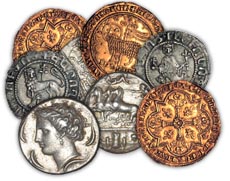
A:
The US Mint began putting notches on the edges
of coins containing gold and silver to discourage
holders from shaving off small quantities of the
precious metals. Dimes, quarters and half dollars
are notched because they used to contain silver.
Pennies and nickels aren't notched because the
metals they contain are not valuable enough to
shave.
Q: Why do men's
clothes have buttons on the right while women's
clothes have buttons on the left?
A:
When buttons were invented, they were very expensive
and worn primarily by the rich. Because wealthy
women were dressed by maids,dressmakers put the
buttons on the maid's right. Since most people
are right-handed, it is easier to push buttons
on the right through holes on the left. And that's
where women's buttons have remained since.
Q: Why do X's at
the end of a letter signify kisses?

A:
In the Middle Ages, when many people were unable
to read or write,documents were often signed using
an X. Kissing the X represented an oath to fulfill
obligations specified in the document. The X and
the kiss eventually became synonymous.
Q: Why is shifting
responsibility to someone else called "passing
the buck"?
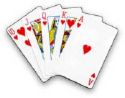
A:
In card games, it was once customary to pass an
item, called a buck,from player to player to indicate
whose turn it was to deal. If a player did not
wish to assume the responsibility, he would "pass
the buck"to the next player.
Q: Why do people
clink their glasses before drinking a toast?
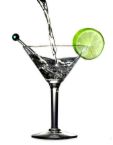
A:
It used to be common for someone to try to kill
an enemy by offering him a poisoned drink. To
prove to a guest that a drink w as safe, it became
customary for a guest to pour a small amount of
his drink into the glass of the host. Both men
would drink it simultaneously. When a guest trusted
his host, he would then just touch or clink the
host's glass with his own.
Q: Why are people
in the public eye said to be "in the limelight"?
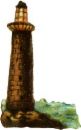
A:
Invented in 1825, limelight was used in lighthouses
and stage lighting by burning a cylinder of lime
which produced a brilliant light. In the theatre,performers
on stage "in the limelight" were seen by the audience
to be the center of attention.
Q: Why do ships
and aircraft in trouble use "mayday" as their
call for help?
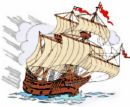
A:
This comes from the French word m'aidez - meaning
"help me"-- and is pronounced "mayday".
Q: Why is someone
who is feeling great "on cloud nine"?

A:
Types of clouds are numbered according to the
altitudes they attain,with nine being the highest
cloud. If someone is said to be on cloud nine,
that person is floating well above worldly cares.
Q: Why are zero
scores in tennis called "love"?
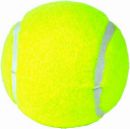
A:
In France, where tennis first became popular,
a big, round zero on the scoreboard looked like
an egg and was called "l'oeuf," which is French
for "egg." When tennis was introduced in the US,
Americans pronounced it "love."
Q: In golf, where
did the term "Caddie" come from?
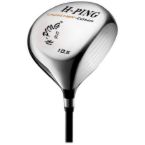
A:
When Mary, later Queen of Scots, went to France
as a young girl (for education & survival),
Louis, King of France, learned that she loved
the Scot game "golf." So he had the first golf
course outside of Scotland built for her enjoyment.
To make sure she was properly chaperoned (and
guarded) while she played, Louis hired cadets
from a military school to accompany her. Mary
liked this a lot and when she returned to Scotland
(not a very good idea in the long run), she took
the practice with her. In French, the word cadet
is pronounced 'ca-day' and the Scots changed it
into"caddie."
So now YOU know!